
Reconstruct Floyd County Owner Transfers
A backward deed table keeps former owners, dates, and land references lined up. Begin with a verified current deed. Then add one row per earlier transfer. Resist shortcuts. An assessment card's year can mislead, and not every instrument was a sale.
| Transfer date | Grantor to grantee | Deed type | Book/page |
|---|---|---|---|
| Newest first | Prior owner to present grantee | Warranty, quitclaim, order, or other | Copy from latest deed |
| One step earlier | Earlier owner to that grantor | Preserve exact instrument type | Follow source of title |
| Repeat backward | Each predecessor to the next | Note corrections and estates | Match legal description |
For bridging deeds, the source-of-title statement is the strongest link. Streets get renamed. But a creek, hollow, lot, block, or earlier book and page reference can hold steady for a century.
Use Floyd County Owner Indexes
The Floyd County Clerk records deeds and other land instruments, and its official deed guidance page spells out recording requirements. It publishes no open index. Search at the counter, ask whether eCCLIX covers Floyd, or send a focused request listing names, dates, book and page, and the legal description.
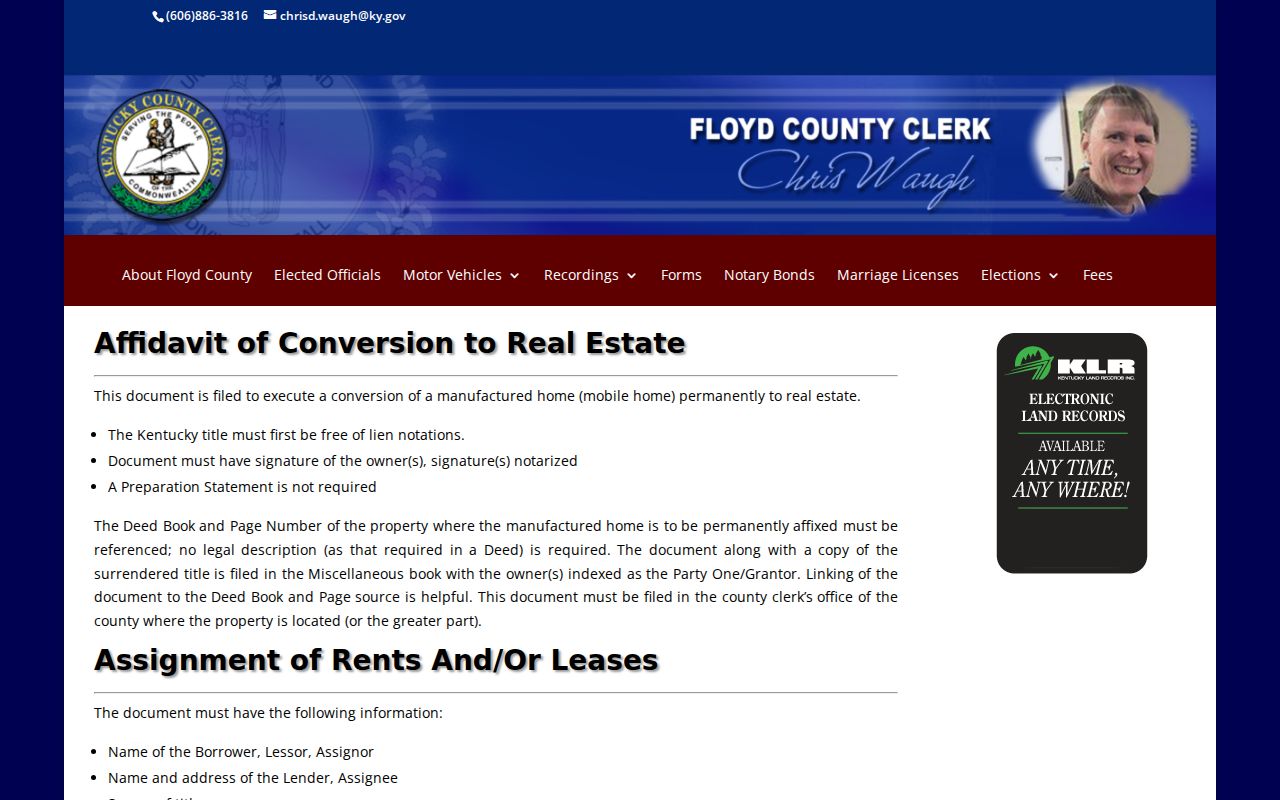
That page shows the facts that connect each old deed to the next. It is guidance, though, not a live index result. Use it to shape your request.
Floyd County Owner Books Reach 1810
Microfilm finding aids list Floyd County deed books from 1810 through 1901 and deed indexes from 1810 through 1969 at the library and on FamilySearch. Those are catalog ranges. Access still depends on the film itself. KDLA accepts written requests and onsite research; name the county, record type, parties, and likely years.
Note: Floyd County’s modern online cutoff is unverified; never substitute the microfilm dates for web coverage.
Walk Floyd County Owner History Backward
Owner history reveals itself when you reverse the index path. Name the current grantee first. The grantor on that deed becomes the next prior owner, so hunt the instrument by which that party acquired the same land. Repeat until the trail thins.
- Find the newest deed with the current owner as grantee.
- Read its grantor and copy the source-of-title reference.
- Search that grantor as a grantee in the earlier index.
- Repeat, moving to books or microfilm when needed.
- Grantor
- The party conveying an interest.
- Grantee
- The party receiving it.
- Chain of title
- The ordered run of transfers.
- Reverse index
- An index used to find the receiving party.
- Quitclaim
- A transfer without a warranty of title.
Floyd County Owner Records Break at 1808
Floyd County dates to 1800. Its first courthouse burned on April 8, 1808. The Clerk confirms that early government records do not survive that loss. A dead-end search can mean destruction, not that no owner existed. Early Floyd territory also fed later counties. A tract's trail may continue in a successor county. Lean on parent-county history, warrants, surveys, and watercourse names.
Historic limit. A full chain before the 1808 fire may be impossible from Floyd County books alone.
Recover Floyd County Owner Transfers
Land does not always move by sale deed. Probate can name an estate, executor, administrator, heirs, a sale order, or a distribution. Search personal names, "Estate of," fiduciary names, and trust titles in both index roles. Affidavits of descent, executor deeds, court orders, and releases can bridge a gap. Obituaries, cemetery records, and local newspapers add name variants. But only a recorded instrument proves the transfer. Watch for a recorded name shifting from a person to an estate, fiduciary, or group of heirs. Start with the Floyd Circuit Clerk probate file at that point. Then return to the County Clerk index for the deed. It carried the land into or out of that estate.
Follow Floyd County Owner Description Clues
Easements, releases, correction deeds, mortgages, and plats can preserve an old book and page. They can also preserve an owner name. A correction may fix a defect without changing parties. A quitclaim may convey only partial interest. Meanwhile, creek, branch, hollow, railroad, mine, road, and valley references often outlast a house number. Recorded plats add lot order and survey context. Floyd plats also require planning-commission approval and surveyor certification. A plat can restore a subdivision's original lot sequence. This helps when later tax addresses no longer match the first deed description.
Search Floyd County Ownership Offline
When the portal trail ends, carry the deed reference to the Clerk. The reference also works with the FamilySearch catalog, KDLA, or the Floyd County Public Library newspaper archive. Search old notices by family name, creek, branch, and former community. Keep middle initials, spouse and maiden variants, and entity names intact. A newspaper may explain an estate or sale. But the deed or court order confirms its effect on the land. KDLA requests should name Floyd County, the record type, parties, and date range. Expect published service times of four to six weeks. Fees run $20 in-state or $25 out-of-state for search and copy. Some reproduction or postage costs may apply.
Recognize Floyd County Owner Chain Detours
A clean run of warranty deeds is only one kind of ownership history. Floyd County records also hold affidavits of descent and correction deeds. They hold contracts for deed, trust instruments, bankruptcy deeds, leases, powers of attorney, easements, and releases. Some repair the chain or explain authority rather than mark a new purchase. Keep each instrument type in the timeline. Read every source-of-title clause and compare land descriptions across deeds. A mortgage release may point to an older book and page. Yet it records a discharged debt, not a transfer. A lis pendens flags litigation that later produced an order or deed. Treat those items as leads, then locate the actual conveyance.
Resolve Floyd County Former Owner Names
Surnames alone settle nothing in Floyd County deed records. A common name demands more evidence. Keep middle initials, spouse names, maiden names, estate roles, entity suffixes, and mailing addresses beside the land description. Trace each former owner through both the grantor and grantee indexes. One person may have bought, sold, mortgaged, corrected, or released an interest at different times, and every role adds a thread to the chain of title.
Entities need extra care. Match an LLC's exact deed name against its Kentucky Secretary of State business record, and for a trust try both the trust title and the trustee. Those supporting records give identity context, while the County Clerk instrument still anchors the name to the Floyd County parcel.
Track Floyd County Owners Across Boundaries
Floyd County's borders have not stood still. Old Floyd tracts sometimes sit in a successor county now. The chain of title continues in another courthouse. The land description and family name may still look familiar enough to recognize. Check the boundary-change date before calling a missing index entry a break.
City lines move too. Martin's Secretary of State filing history includes a 2003 ordinance marked unmappable. A municipal filing cannot always be overlaid with confidence. Keep the ordinance number. Recorded deeds, plats, and parcel descriptions still carry the ownership sequence.
Measure Floyd County Ownership Time Depth
Floyd County former owners run deep. Permanent indexes, bound books, and microfilm carry the trail far back, but no honest online start date exists. The catalog run begins in 1810. A courthouse fire breaks the record even earlier. Later gaps can come from name variants, probate, shifted boundaries, unrecorded interests, or portal limits. Note each source. A missing result is not proven absence.
House history can braid deeds, plats, tax clues, probate, and newspapers into one story. Kentucky's retention schedule makes general deed and recorded-instrument indexes permanent and unrestricted. That clears the way for a courthouse search. The county website offers no public index. Ask for the index entry first. The book and page lead straight to the instrument. The Clerk issues a certified current copy, while an archive copy may serve only historical study.
Older land may carry no modern address. A plat, mineral lease, easement, or metes-and-bounds calls may define it instead. Follow the tract, not just the person. Acreage, adjoining-owner calls, watercourses, and source-of-title references keep the right former owner tied to a divided parcel. The local newspaper archive adds dates, family relationships, legal notices, courthouse events, and old community names; search by creek or branch as well as by postal city. News narrows the hunt, but only a deed book entry, probate order, or recorded affidavit confirms a change in ownership.
Keep a research log. List every name variant, index role, year span, book and page, parcel description, and source location. No gap gets searched twice. An unresolved link then stays clear for a later title professional or family researcher.
Lawful use. Previous-owner research supports house history, title work, and heir questions. Never use names to track, harass, or harm a living person.